Bitcoin Bharat Brings Bitcoin Education to Over 300 Youths in Sonipat, Haryana
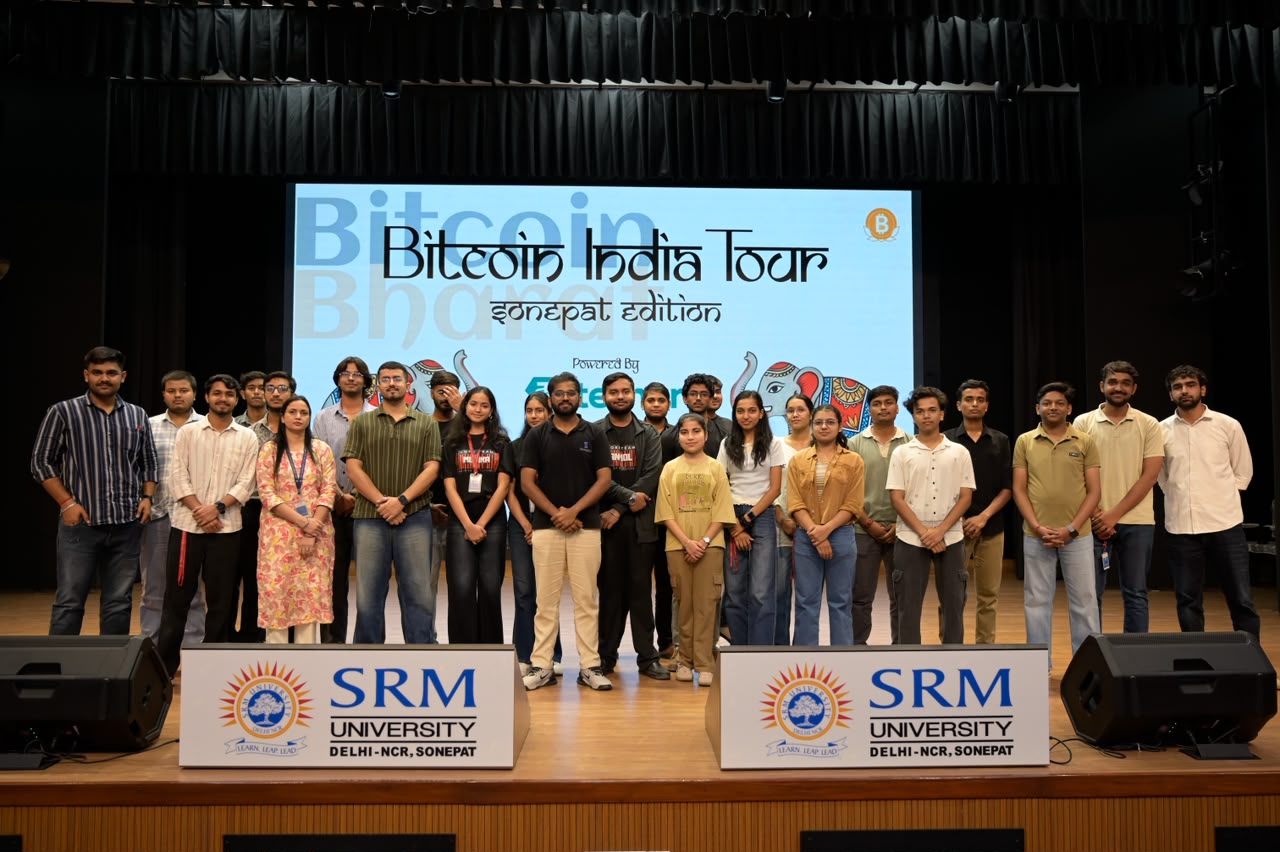
Bitcoin Bharat Takes Bitcoin Education to Sonipat
Bitcoin Bharat recently brought the conversation around Bitcoin, financial literacy, and self-custody to Sonipat, Haryana, in an engaging educational session attended by more than 300 people.
The event focused on helping young people understand Bitcoin beyond market prices and headlines. The session explored the fundamentals of Bitcoin, why it matters in the evolving financial landscape, and one of the most important concepts for anyone using Bitcoin and digital assets - self-custody.
For Bitcoin Bharat, educating the next generation is an important part of building a stronger and more informed Bitcoin community in India.
Why Bitcoin Education Matters for Young Indians
Bitcoin is increasingly becoming part of conversations around technology, finance, payments, and the future of money. However, understanding Bitcoin requires more than simply knowing its name or following its price.
Young people need the right knowledge to understand the technology and principles behind Bitcoin and how they may influence the financial systems of the future.
The Sonipat session was designed around this idea.
Participants explored important questions such as:
What exactly is Bitcoin?
Why was Bitcoin created?
How is Bitcoin different from traditional financial systems?
What does ownership mean in a digital financial system?
What is self-custody?
Why are private keys important?
What responsibilities come with controlling your own digital assets?
These conversations are becoming increasingly relevant as financial technology continues to evolve.
More Than 300 People Join the Sonipat Session
The response from the Sonipat community was one of the biggest highlights of the event.
With more than 300 participants joining the session, the event demonstrated the growing interest among young people in understanding Bitcoin and the broader ideas surrounding digital ownership and financial awareness.
The strong turnout also highlighted the importance of Bitcoin education in India.
Students and young professionals are not only interested in learning about emerging technologies. They also want to understand how these technologies can influence the way people interact with money, financial infrastructure, and digital assets.
Bitcoin Bharat's campus and community initiatives aim to make these conversations more accessible to young audiences across India.
Understanding Bitcoin Self-Custody
One of the central topics of the Sonipat event was Bitcoin self-custody.
Self-custody means having control over the private keys associated with your wallet and digital assets, instead of relying entirely on another party to hold them for you.
This is an important concept in Bitcoin because the network allows individuals to control and transfer value without requiring a traditional financial intermediary to approve every transaction.
However, self-custody also comes with responsibility.
When someone controls their own wallet, they are responsible for protecting the information that provides access to their assets. This makes understanding wallet security, private keys, and recovery information an essential part of Bitcoin education.
Self-custody is not simply about having control. It is about understanding and taking responsibility for that control.
Why Is Self-Custody Important?
1. Direct Control Over Your Assets
Self-custody allows individuals to have direct control over their digital assets rather than depending completely on a third party to hold them.
2. Understanding Digital Ownership
Bitcoin introduces a different concept of ownership in the digital world. Understanding wallets and private keys helps users understand what it actually means to control Bitcoin.
3. Less Dependence on Intermediaries
With a self-custodial wallet, users can interact with the Bitcoin network directly rather than requiring a custodian to manage their assets on their behalf.
4. Greater Financial Awareness
Learning about self-custody also encourages people to understand digital security, wallet management, backups, and responsible asset management.
5. Personal Responsibility
Self-custody comes with responsibility. Users must protect their wallet credentials and recovery information because losing or exposing sensitive information can put access to their assets at risk.
This makes self-custody an important subject for anyone looking to understand Bitcoin beyond the basics.
Tether Self-Custody Demonstration
To make the concept of self-custody easier to understand, the Sonipat session included a practical demonstration using Tether Wallet.
Bitcoin Bharat would like to thank Tether for supporting the educational demonstration and helping participants understand how self-custody works in practice.
The demonstration helped turn what can often seem like a technical concept into something more understandable for newcomers.
Participants were introduced to the idea of controlling their own wallet and understanding the responsibility that comes with self-custody.
Learn more about Tether Wallet:
Tether Wallet
The goal of the demonstration was not simply to show people how a wallet works, but to explain why understanding ownership and security matters in the Bitcoin ecosystem.
Self-Custody Is More Than a Technical Concept
For someone new to Bitcoin, terms such as private keys, wallets, recovery phrases, and addresses can initially sound complicated.
But the basic idea is relatively simple.
A self-custodial wallet changes the relationship between a person and their digital assets. Instead of depending entirely on a service provider to control access, the individual takes responsibility for managing the credentials that authorize transactions.
That is why Bitcoin education should not stop at explaining what Bitcoin is.
People should also understand how Bitcoin ownership works and what responsibilities come with controlling their own assets.
As Bitcoin adoption grows, knowledge about self-custody and security can help users approach the technology with greater awareness.
Aditya Ranjan Shares His Bitcoin Experience
The session was led by Aditya Ranjan, who brought both educational knowledge and personal experience to the discussion.
Aditya also shared his experience as a main-stage speaker at Bitcoin Asia, an international Bitcoin conference that brings together members of the global Bitcoin community.
His experience at an international Bitcoin conference gave participants a broader perspective on how Bitcoin is being discussed around the world.
The session connected the fundamentals of Bitcoin with the wider global conversation around Bitcoin education, technology, adoption, and financial innovation.
Introducing “B for Bitcoin”
During the session, Aditya Ranjan also shared his work on B for Bitcoin, an educational initiative focused on making Bitcoin easier to understand.
The project aims to introduce Bitcoin concepts in a simple and accessible way, particularly for people who are beginning their Bitcoin journey.
You can learn more about the project here:
B for Bitcoin – bforbitcoin.org
Educational resources like B for Bitcoin can play an important role in helping newcomers move beyond complicated terminology and develop a clearer understanding of Bitcoin and its underlying principles.
From Bitcoin Awareness to Bitcoin Understanding
One of the biggest challenges surrounding emerging technologies is the gap between awareness and understanding.
Millions of people may have heard about Bitcoin, but knowing the name is very different from understanding how it works.
Events like the Sonipat session aim to close that gap.
The objective is not simply to tell people that Bitcoin exists. It is to encourage participants to ask questions, understand the technology, learn about responsible ownership, and develop their own informed perspective.
For young people especially, this type of education can provide a foundation for understanding how financial technology is changing.
Bitcoin Education and the Future of Adoption in India
India has one of the world's largest and youngest populations, making youth education an important part of the country's technological and financial future.
Bitcoin adoption is not only about how many people use Bitcoin. It is also about how well people understand the technology they are interacting with.
Education can help people better understand:
How Bitcoin works
Why decentralization matters
How Bitcoin wallets function
What self-custody means
Why security is important
How private keys and recovery information work
The difference between third-party custody and self-custody
As Bitcoin conversations continue to grow across India, educational initiatives can help ensure that adoption is accompanied by knowledge and awareness.
Bitcoin Bharat's Mission to Educate the Next Generation
The Sonipat event is part of Bitcoin Bharat's broader effort to bring Bitcoin education to universities, campuses, and communities across India.
Meeting people in person creates opportunities for direct conversations, questions, and discussions that can sometimes be difficult to have through social media alone.
The response from more than 300 participants in Sonipat showed the strong interest among young audiences in learning about Bitcoin and its broader impact.
Bitcoin Bharat believes that education is one of the foundations of responsible and meaningful Bitcoin adoption.
Looking Ahead
The future of Bitcoin will not be shaped only by technology.
It will also be shaped by the people who understand it, build with it, teach others about it, and participate in the conversations surrounding it.
The Sonipat event brought together more than 300 participants for exactly that kind of conversation.
From understanding the fundamentals of Bitcoin to learning why self-custody matters, the session focused on giving young people practical knowledge about the changing financial and technological landscape.
The message from the event was simple:
Learn Bitcoin. Understand ownership. Take responsibility.
As Bitcoin education continues to reach more campuses and communities across India, Bitcoin Bharat will continue creating spaces where the next generation can learn, question, and understand the future of money.
Frequently Asked Questions
What was the Bitcoin Bharat event in Sonipat about?
The Bitcoin Bharat event in Sonipat, Haryana, focused on Bitcoin education, financial awareness, digital ownership, and the importance of self-custody. More than 300 participants attended the session.
Why is Bitcoin self-custody important?
Self-custody allows users to control the private keys associated with their digital assets rather than relying entirely on a third-party custodian. It also means the user takes responsibility for protecting their wallet and recovery information.
Who conducted the Bitcoin session in Sonipat?
The session was conducted by Aditya Ranjan, who also shared his experience as a main-stage speaker at Bitcoin Asia and introduced participants to his educational project, B for Bitcoin.
What wallet was used during the demonstration?
Tether Wallet was used for the self-custody demonstration, helping participants understand the concept of controlling their own digital assets.
Where can I learn more about B for Bitcoin?
You can learn more about B for Bitcoin at bforbitcoin.org.
Conclusion
The Sonipat event was more than a Bitcoin awareness session. It was an opportunity for more than 300 people to explore Bitcoin, digital ownership, financial literacy, and self-custody.
Through educational discussions, practical demonstrations, and insights from the global Bitcoin ecosystem, Bitcoin Bharat continues to bring Bitcoin education closer to India's youth.
As Bitcoin adoption evolves, understanding the technology may be just as important as using it.
Bitcoin education is the first step toward building an informed Bitcoin community.
About the Author
Priya Thakur
Content Manager