What is the Lightning Network? Unlocking Fast Bitcoin Payments
What is the Lightning Network? Unlocking Fast Bitcoin Payments
If you’re searching for what is Lightning Network or Lightning explained, you’re likely trying to understand how Bitcoin can be used for fast, everyday payments without losing its core principles. Bitcoin is known for being secure and decentralized, but its base layer was not designed for instant, high-frequency transactions. That’s where the Lightning Network comes in.
Often described as a Bitcoin second layer, the Lightning Network enables off-chain transactions that are quick, efficient, and practical for smaller payments. For beginners, terms like instant BTC basics or “second layer” can sound complex. This guide breaks the Lightning Network down in simple language-what it is, why it exists, and how it works-without hype or technical overload. By the end, you’ll understand how Lightning fits naturally into Bitcoin’s design and why it matters for real-world use.
Introduction: Why Bitcoin Needed the Lightning Network
Bitcoin was created to be reliable and secure first. That focus is what gives it strength-but it also means the base layer prioritizes verification over speed. As more people began using Bitcoin, a question naturally arose: how can Bitcoin support fast, everyday payments while staying true to its principles?
The Lightning Network is the answer to that question. It doesn’t change Bitcoin; it builds on top of it. Instead of forcing every small payment onto the main network, Lightning allows users to transact off-chain and settle later. This approach preserves security while improving usability. In this article, we’ll explore how the Lightning Network works, where it’s useful, and what beginners should know before using it.
What Is the Lightning Network?
The Lightning Network is a second-layer protocol built on Bitcoin. Its purpose is to enable fast and low-friction payments without recording every transaction directly on the Bitcoin base layer.
In simple terms:
Bitcoin remains the foundation
Lightning adds a fast payment layer on top
Only final balances are settled on-chai
How the Lightning Network Works
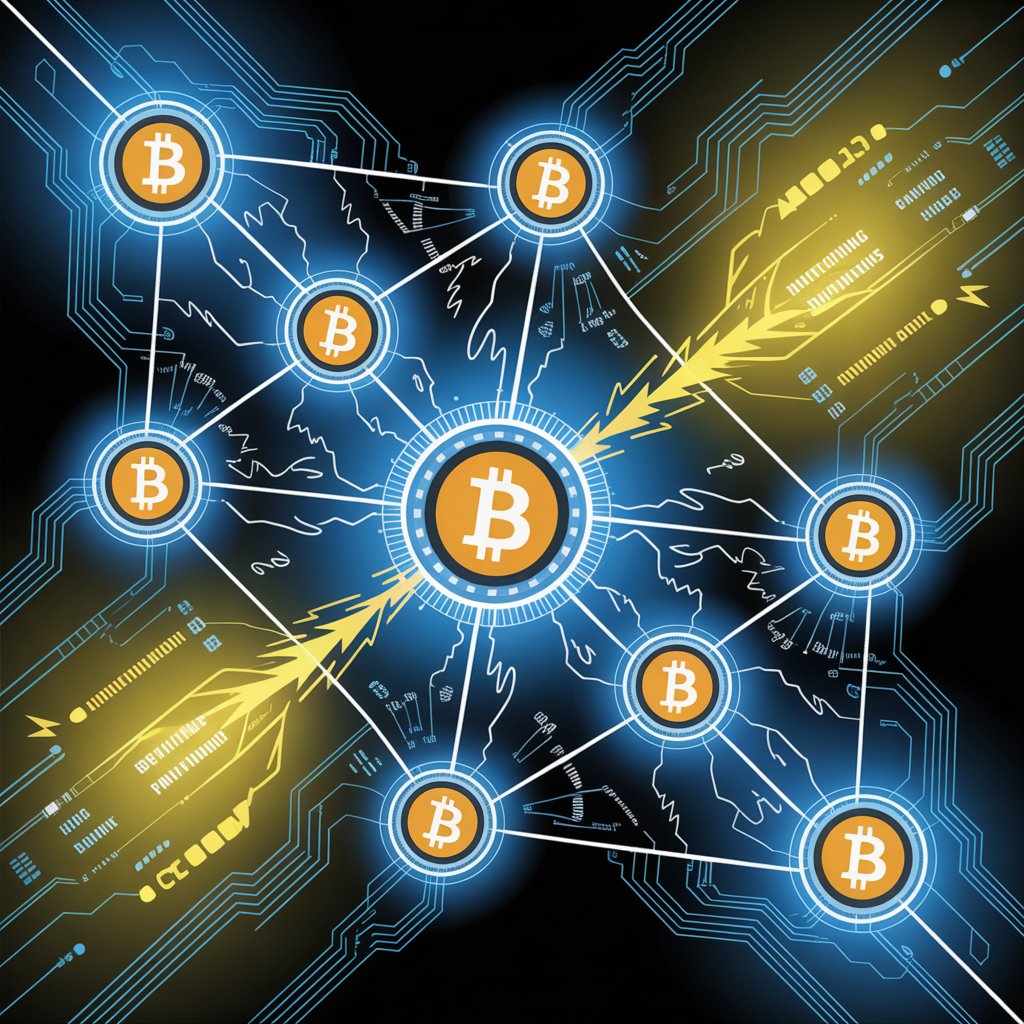
Lightning works by creating payment channels between users. These channels allow multiple transactions to occur off-chain.
A simplified flow looks like this:
Two users open a Lightning channel
They exchange Bitcoin instantly within that channel
Only the final balance is recorded on the Bitcoin network
This means hundreds of small payments can happen without congesting the base layer. Importantly, Lightning does not replace Bitcoin-it extends its usability.
Why Lightning Matters for Bitcoin Payments
Bitcoin’s strength lies in its security and transparency. Lightning complements that strength by making Bitcoin more practical for daily use.
Lightning matters because it enables:
Faster transactions
Low-latency payments
Efficient use of the base layer
Rather than forcing Bitcoin to do everything at once, Lightning separates responsibilities: security on-chain, speed off-chain.
Real-World Use Cases of the Lightning Network
Lightning is especially useful in situations where speed matters:
Small-value payments
Frequent transactions
Time-sensitive transfers
Learning Bitcoin payment flows
These use cases show why Lightning is often described as enabling Bitcoin to behave more like everyday digital money-without compromising its core design.
Common Misunderstandings About Lightning
Lightning is sometimes misunderstood, especially by first-time users.
Common misconceptions:
Lightning is a separate currency (it is not)
Lightning replaces Bitcoin (it builds on it)
Lightning is only for experts (many tools simplify it)
Understanding these points helps beginners approach Lightning with confidence instead of hesitation.
“Good systems don’t replace foundations-they extend them.”
Risks, Limits, and Responsible Use
Like any system, Lightning has boundaries. It is designed for speed and convenience, not long-term storage. That distinction is important.
Responsible use means:
Understanding when to use Lightning
Knowing that it complements on-chain Bitcoin
Choosing tools that explain workflows clearly
The goal is balance-using the right layer for the right purpose.
Practical Advice for First-Time Lightning Users
If you’re new to Lightning:
Start small and learn the flow
Use tools designed for clarity
Focus on understanding, not speed
Treat Lightning as a payment layer
Lightning works best when users understand why it exists, not just how to click buttons.
Lightning and User Experience
Modern Bitcoin tools are increasingly designed to make Lightning approachable. Good user experience focuses on:
Clear transaction visibility
Simple payment flows
Smooth transitions between layers
Platforms like Swapso reflect this philosophy by emphasizing user understanding and control, helping users interact with Bitcoin and its layers without unnecessary complexity.
This approach aligns Lightning with Bitcoin’s broader goal: empowering users through clarity.
If you want to use Bitcoin for fast, practical payments while still valuing ownership and transparency, understanding the Lightning Network is an important step. Tools built with simplicity and user control in mind-such as swapso-help bridge the gap between Bitcoin’s secure foundation and its everyday usability.
Lightning works best when it feels intuitive, not intimidating.
Frequently Asked Questions (FAQs)
1. What is the Lightning Network in Bitcoin?
It is a second-layer system that enables fast, off-chain Bitcoin payments.
2. Does Lightning replace Bitcoin transactions?
No. It complements Bitcoin by handling small, frequent payments.
3. Are Lightning transactions secure?
They rely on Bitcoin’s underlying security while improving speed.
4. Is Lightning suitable for beginners?
Yes, especially when using beginner-friendly tools.
5. When should Lightning be used?
For fast, low-friction payments rather than long-term holding.
The Lightning Network is not about changing Bitcoin-it’s about unlocking its full potential. By separating speed from settlement, Lightning allows Bitcoin to scale naturally while staying true to its original design. For beginners, understanding Lightning is less about technology and more about purpose: using the right tool for the right moment.