What Are Satoshis(Sats)? The Smallest Unit of Bitcoin Explained
What Are Satoshis (Sats)? The Smallest Unit of Bitcoin Explained
If you’ve searched what are satoshis or sats Bitcoin, you’re likely trying to understand how Bitcoin works at a more practical level. Many beginners assume Bitcoin can only be used in whole units, which makes it feel distant or difficult to start with. That’s where satoshis-often called “sats”-come in.
Satoshis are the smallest units of Bitcoin. Understanding them makes Bitcoin easier to use, easier to think about, and easier to learn with. This guide explains Bitcoin denominations in simple language, shows how sats fit into everyday usage, and introduces ideas like stacking sats for beginners and micro-Bitcoin units-without hype or complexity.
By the end, you’ll understand why sats matter, how they’re used, and why learning in sats helps first-time users feel more confident with Bitcoin.
Introduction: Why Satoshis Matter for Beginners
When people first learn about Bitcoin, they often picture it as a single, large unit-something you either have or don’t have. This creates a problem: beginners feel they need a lot of money or technical knowledge to get started.
In reality, Bitcoin was designed to be divisible. That means it can be broken down into much smaller units, making it practical for everyday use and learning. These smaller units are called satoshis.
This article explains what satoshis are, how they relate to Bitcoin, and why thinking in sats helps new users understand Bitcoin more clearly. There’s no speculation here-just fundamentals. The goal is simple: make Bitcoin feel approachable by explaining its smallest building block.
What Are Satoshis?
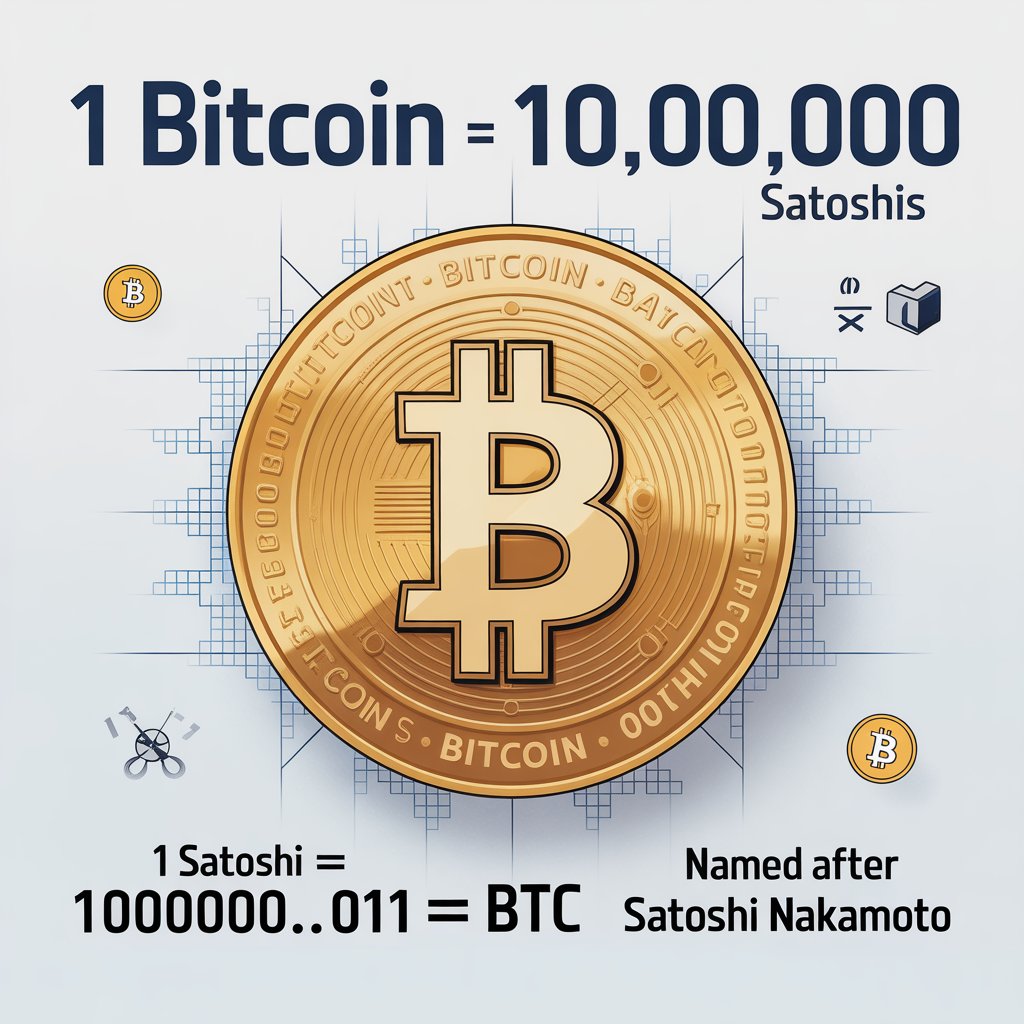
A satoshi is the smallest unit of Bitcoin.
1 Bitcoin = 100,000,000 satoshis
“Sats” is the common short form
This means Bitcoin can be divided into very small pieces, making it flexible and usable at different scales.
Section of Blog | Image Topic / Visual Idea | Image Purpose | Suggested Caption (Use Below Image) |
What Are Satoshis? | Bitcoin denominations chart | Helps beginners visually understand how Bitcoin is divided into smaller units | Figure 1: Bitcoin can be divided into smaller units called satoshis. |
What Are Satoshis? | Satoshis to Bitcoin conversion graphic | Explains the relationship between 1 BTC and 100,000,000 sats | Figure 2: One Bitcoin equals 100 million satoshis. |
What Are Satoshis? | Bitcoin smallest unit illustration | Reinforces the idea of sats as the base unit of Bitcoin | Figure 3: Satoshis are the smallest measurable unit of Bitcoin. |
How Sats Are Used | Bitcoin wallet showing balance in sats | Shows real-world usage and how sats appear in wallets | Figure 4: A Bitcoin wallet displaying balance in satoshis. |
How Sats Are Used | Sending satoshis illustration | Demonstrates how small Bitcoin amounts are transferred | Figure 5: Satoshis enable small and simple Bitcoin transactions. |
How Sats Are Used | Bitcoin balance displayed in sats | Makes Bitcoin feel approachable for beginners | Figure 6: Viewing Bitcoin in sats makes balances easier to understand. |
Satoshis are named after Satoshi Nakamoto, the pseudonymous creator of Bitcoin. Instead of thinking “I need a full Bitcoin,” users can think in sats-just like cents are used instead of whole dollars.
Bitcoin Denominations Explained (Simple Breakdown)
Bitcoin supports multiple denominations, but satoshis are the most important for everyday understanding.
Here’s a simple way to look at it:
Bitcoin (BTC): the full unit
Satoshis (sats): the smallest unit
This design allows Bitcoin to scale naturally. As usage grows, people don’t need to deal with fractions that feel abstract—they can simply count sats.
This is why many beginner tools and wallets display balances in sats by default: it’s more intuitive.
Why Bitcoin Uses Satoshis (Purpose & Design)
Bitcoin’s divisibility was intentional. The system was designed to work at both large and small scales.
Satoshis matter because they:
Make Bitcoin usable for small amounts
Help beginners learn without pressure
Support everyday transactions
Encourage long-term understanding
Rather than forcing users to think in decimals, sats keep things simple. You’re not dealing with “0.0001 Bitcoin”-you’re dealing with 10,000 sats.
“Good systems hide complexity without hiding understanding.”
How Sats Are Used in Practice
Sats are used wherever Bitcoin is used-just at a smaller scale.
Common examples:
Learning and experimenting with Bitcoin
Sending small payments
Gifting Bitcoin
Tracking balances more intuitively
Stacking Sats: A Beginner-Friendly Concept
You may hear the phrase “stacking sats.” For beginners, this simply means accumulating small amounts of Bitcoin over time.
It’s not about timing markets or making predictions. It’s about learning, consistency, and understanding how Bitcoin ownership works-one small step at a time.
Stacking sats helps beginners:
Learn without feeling overwhelmed
Build familiarity with Bitcoin tools
Develop good habits around ownership
This approach aligns well with education-first learning.
Common Mistakes Beginners Make With Sats
While sats make Bitcoin easier, confusion can still happen.
Common mistakes:
Thinking sats are a separate currency
Ignoring how denominations relate
Overcomplicating simple concepts
Not understanding where sats are stored
The solution is straightforward: learn the basics slowly and use tools that explain balances clearly.
Practical Advice for First-Time Users
If you’re new to Bitcoin denominations:
Start thinking in sats, not full Bitcoin
Use clear, beginner-friendly tools
Focus on understanding ownership
Treat learning as the main goal
Bitcoin was designed to be learned gradually. Sats make that process accessible.
Sats, Ownership, and User Control
Understanding sats naturally leads to understanding ownership. Whether you hold one satoshi or many, the principle is the same: control matters.
Tools that emphasize clarity and user control help beginners understand how sats are stored, sent, and protected-without overwhelming detail.
Platforms like Swapso reflect this philosophy by focusing on simple balances, user ownership, and intuitive workflows. The idea is not to push complexity, but to support learning through transparency.
If you want to learn Bitcoin in a way that feels approachable, starting with sats is a practical step. Using platforms designed around clarity and user control-such as Swapso-can help you understand how sats fit into real Bitcoin usage, without pressure or confusion.
Small units make big systems easier to learn.
Frequently Asked Questions (FAQs)
1. What are satoshis in Bitcoin?
Satoshis are the smallest unit of Bitcoin, representing a fraction of one Bitcoin.
2. Are sats different from Bitcoin?
No. Sats are simply smaller units of Bitcoin.
3. Why do people use sats instead of Bitcoin?
Because sats are easier to understand and work with for small amounts.
4. Is stacking sats only for advanced users?
No. It’s a beginner-friendly way to learn and engage with Bitcoin.
5. Can Bitcoin really be divided that much?
Yes. Bitcoin was designed to be highly divisible.
Satoshis make Bitcoin human-scale. They turn a complex system into something learners can understand one step at a time. By starting with sats, beginners gain clarity, confidence, and a deeper appreciation of how Bitcoin actually works.