How Bitcoin Means Financial Freedom
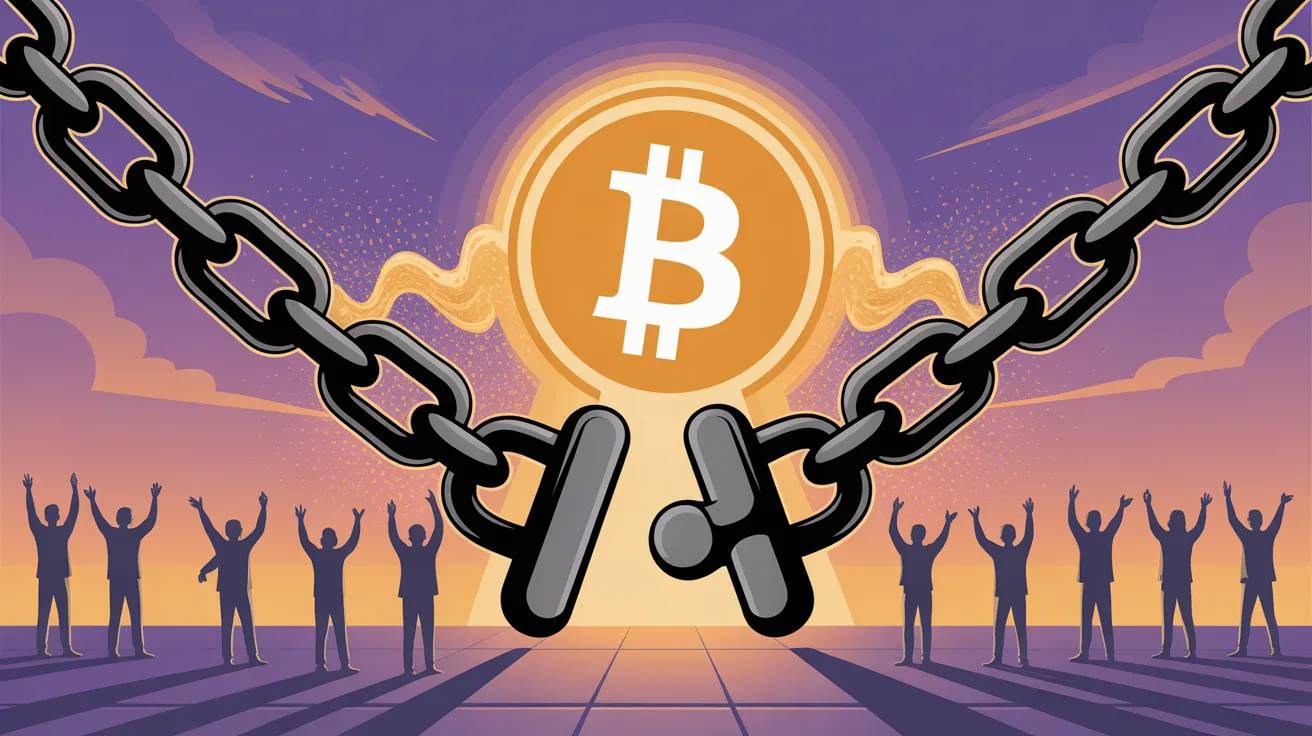
In an era of economic uncertainty, financial freedom isn’t just about having money- it’s about owning it completely. No banks can seize it. No governments can inflate it away. No borders can block it. Bitcoin, the original cryptocurrency launched in 2009 by the pseudonymous Satoshi Nakamoto, delivers exactly that: sovereign money for the digital age.
As of March 2026, Bitcoin trades around $72,000 with a market capitalization exceeding $1.4 trillion. Over 106 million people worldwide own BTC, and global crypto adoption has reached nearly 560 million users. These aren’t just numbers- they represent millions escaping traditional finance.
The Broken Traditional System
Traditional finance relies on trust in central banks and intermediaries. History shows that trust gets broken repeatedly:
Central banks print money at will, causing inflation that erodes savings.
Banks can freeze accounts (as seen in Canada’s 2022 trucker protests or various political cases).
Cross-border transfers take days and cost 5-10% in fees.
Billions remain unbanked- especially in developing nations- locked out of the global economy.
Bitcoin was designed to solve these exact problems.
1. Decentralization: Your Keys, Your Coins
Bitcoin operates on a global peer-to-peer network with no single point of failure. You hold your private keys → you control your money. This is self-custody in its purest form.
“I’ve been working on a new electronic cash system that’s fully peer-to-peer, with no trusted third party.” Satoshi Nakamoto (2008 whitepaper introduction)
No bank, no government, no CEO can block your transactions or seize your funds. This is financial sovereignty.
2. Fixed Supply: The Ultimate Inflation Hedge
Bitcoin has a hard cap of 21 million coins- forever. After the 2024 halving, new supply issuance dropped to roughly 0.78–0.83% annually (lower than gold’s ~1.5%).
Compare this to fiat currencies:
Bitcoin vs. Fiat Inflation Comparison Table
Asset | Supply Mechanism | Current Annual Inflation Rate | Historical Control |
|---|---|---|---|
Bitcoin | Algorithmic (21M cap) | ~0.8% | Decentralized, predictable |
USD (Fiat) | Central bank discretion | 2–10%+ (varies by policy) | Government-controlled |
Gold | Mining (limited) | ~1.5% | Centralized production |
Data sources: Post-2024 halving figures and comparative analyses.
Unlike fiat, which lost 80-90% of purchasing power over decades in many countries, Bitcoin’s scarcity makes it “digital gold” on steroids. Long-term holders have preserved and multiplied wealth during hyperinflationary periods in Venezuela, Argentina, and elsewhere.
3. Borderless & Censorship-Resistant Money
Send $1 million to anyone, anywhere, in minutes for pennies using the Lightning Network. No SWIFT, no correspondent banks, no paperwork.
In oppressive regimes or during capital controls, Bitcoin has become a lifeline. Remittances flow instantly and cheaply- critical in countries where traditional channels fail.
4. Global Adoption & Real-World Impact (2026 Data)
Bitcoin ownership and usage have exploded:
106 million Bitcoin owners worldwide
200 million Bitcoin wallets created
Daily active Bitcoin users: ~400,000
US adoption: 30% of American adults (~70 million people) own cryptocurrency, with 74% of them holding Bitcoin
Top adoption leaders: India, United States, Vietnam, Pakistan (Chainalysis 2025 Global Adoption Index)
Bitcoin Performance vs. Traditional Assets (2016–2026 approximate cumulative returns)
Asset | ~10-Year Return | Notes |
|---|---|---|
Bitcoin | 5,000%+ | Highest volatility but superior long-term growth |
S&P 500 | ~200–300% | Steady equities benchmark |
Gold | ~20% | Traditional inflation hedge |
Bitcoin’s compound annual growth rate since 2011 stands at ~92%, far outpacing gold (8.7%) and the S&P 500 (16.5%).
Countries are noticing: El Salvador made Bitcoin legal tender in 2021, boosting tourism, remittances, and financial inclusion for the unbanked.
Here's what some visionaries have to say-
Satoshi Nakamoto: “The root problem with conventional currency is all the trust that’s required to make it work. The central bank must be trusted not to debase the currency, but the history of fiat currencies is full of breaches of that trust.”
Michael Saylor (MicroStrategy CEO): “There is no second best.” and “Fix the Money, Fix the World.”
Andreas Antonopoulos: “Bitcoin is the best money that humanity has ever had.”
These visionaries highlight Bitcoin’s role as more than an asset- it’s a peaceful revolution in money.
Risks to Consider (Honest Perspective)
Bitcoin is volatile. Prices swing dramatically. Regulatory uncertainty exists in some countries. And self-custody means you alone are responsible- no “forgot password” recovery. Education and security practices (hardware wallets, multi-signature) are essential.
Yet for those who understand it, the risk-reward asymmetry favors early adopters who treat Bitcoin as a long-term store of value rather than a get-rich-quick scheme.
Conclusion: Your Path to Financial Freedom Starts Here
Bitcoin isn’t just “digital money.” It’s the first truly neutral, scarce, global currency in human history- designed for individuals, not institutions.
Whether you’re protecting savings from inflation, sending money home without banks, or building generational wealth outside the system, Bitcoin offers something fiat never can: freedom.
Start small. Learn self-custody. Stack sats. The network grows stronger with every new participant.
In the words of Michael Saylor: “Everyone gets Bitcoin at the price they deserve.”
The question is- will you claim your financial freedom today?