From On-Chain to Lightning: Optimizing Your Bitcoin Transactions
From On-Chain to Lightning: Optimizing Your Bitcoin Transactions
Introduction
When users first start using Bitcoin, they often notice that not all transactions feel the same. Some transfers are better suited for long-term holding, while others are meant for quick payments. This difference exists because Bitcoin operates across multiple layers, each designed for a specific purpose.
Understanding when to use Bitcoin’s base layer (on-chain) and when to use the Lightning Network helps users move Bitcoin more efficiently. It’s not about choosing one over the other, it’s about using each layer wisely.
In this guide, we’ll explain on-chain vs Lightning, explore practical Bitcoin optimization techniques, compare transaction speeds and fees, and show how hybrid wallet usage can help everyday users get the best experience.
Understanding On-Chain Bitcoin Transactions
On-chain transactions happen directly on the Bitcoin blockchain.
These transactions:
Are recorded permanently on the public ledger
Offer the highest level of security
Are ideal for long-term storage and larger transfers
Because every on-chain transaction competes for block space, confirmations may take time depending on network activity.
On-chain Bitcoin is best thought of as the settlement layer,the foundation of trust and security.
Image Link: https://bitcoinmagazine.com/wp-content/uploads/2020/10/Evergreen_LightningNetwork-1-1024x576.png
Credit: Bitcoin Magazine
What Is Lightning and How Is It Different?
The Lightning Network is a second-layer system built on top of Bitcoin.
Lightning transactions:
Happen off-chain
Are confirmed almost instantly
Are well suited for frequent or smaller payments
Instead of recording every transaction on the blockchain, Lightning settles multiple transactions efficiently and records only final balances on-chain.
This makes Lightning ideal for speed and convenience.
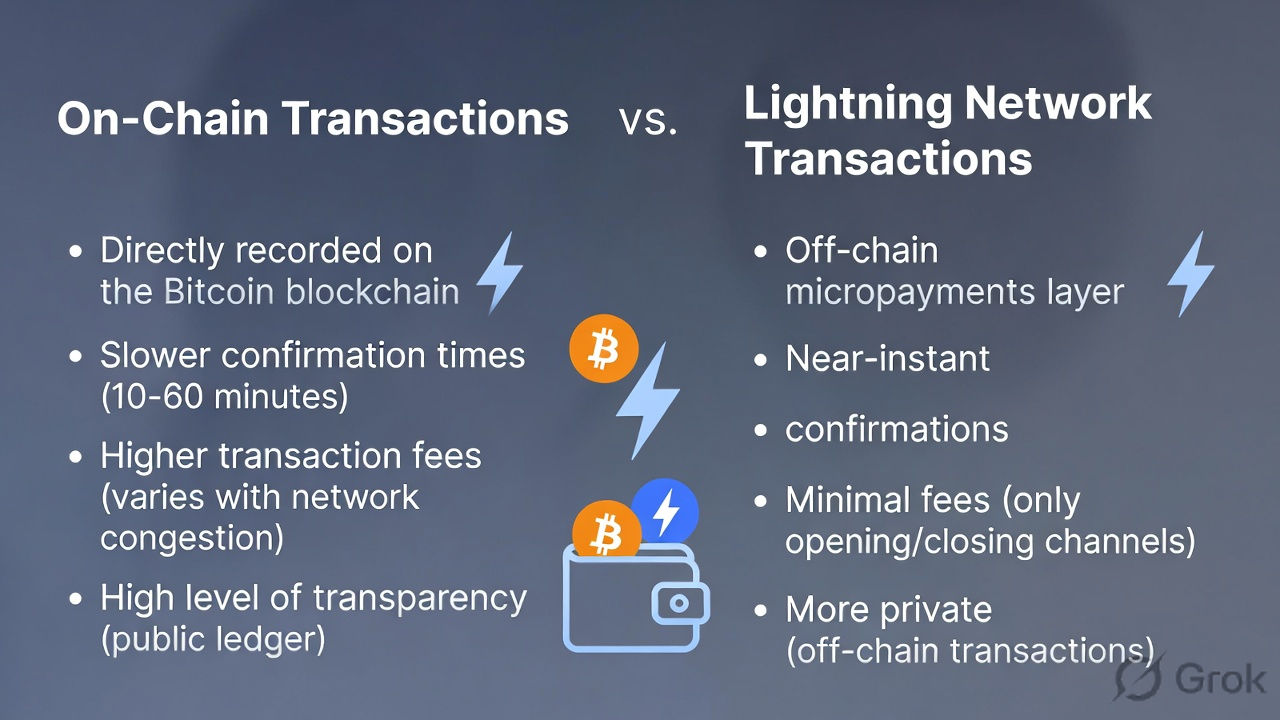
On-Chain vs Lightning: Key Differences
Understanding on-chain vs Lightning helps users choose the right tool for each situation.
Transaction Speed Comparison
On-chain: Confirmation time depends on network conditions
Lightning: Transactions feel instant
Lightning offers a smoother experience for real-time payments, while on-chain transactions prioritize final settlement.
Fee Reduction Techniques
Fees differ between the two layers:
On-chain fees vary based on demand
Lightning fees are generally lower for frequent payments
Using Lightning for smaller or frequent transactions is one of the simplest fee reduction techniques available to Bitcoin users.
Image Link: https://share.google/images/97xRsYMYFLzcOqGV4
Credit: Unchained Capital
Bitcoin Optimization: Using the Right Layer
Bitcoin optimization is about using Bitcoin more intentionally.
Best practices include:
Using on-chain transactions for savings or larger transfers
Using Lightning for everyday spending
Avoiding unnecessary on-chain activity for small payments
This layered approach improves both cost efficiency and user experience.
Hybrid Wallet Usage: The Best of Both Worlds
A hybrid wallet supports both on-chain Bitcoin and Lightning.
With hybrid wallet usage, users can:
Hold Bitcoin securely on-chain
Move funds to Lightning when needed
Switch between layers without friction
This flexibility allows users to optimize transactions without needing multiple tools.
Image Link: https://share.google/images/fkHWYcsHiqQ4IuUf8
Credit: Crypto.com
Common Optimization Mistakes to Avoid
When learning Bitcoin optimization, beginners sometimes:
Use on-chain transactions for very small payments
Ignore fee settings
Forget which layer they’re using
Understanding the purpose of each layer helps avoid these mistakes.
When Should You Use Each Layer?
A simple guideline:
On-chain: Long-term storage, larger transfers
Lightning: Fast payments, frequent transactions
Both layers complement each other rather than compete.
Conclusion
Bitcoin works best when its layers are used together. Understanding on-chain vs Lightning allows users to move Bitcoin more efficiently while maintaining security and control.
By applying simple Bitcoin optimization strategies,such as comparing transaction speed, reducing fees, and using hybrid wallets,everyday users can improve their Bitcoin experience.
Wallets like Swapso, which support both layers, help users switch smoothly between on-chain and Lightning, making Bitcoin more practical for both saving and spending.
FAQs
1. What is the difference between on-chain and Lightning transactions?
On-chain transactions are recorded on the blockchain, while Lightning transactions happen off-chain for speed.
2. Which is faster: on-chain or Lightning?
Lightning transactions are typically much faster.
3. How can I reduce Bitcoin transaction fees?
Use Lightning for frequent or small payments.
4. What is a hybrid Bitcoin wallet?
A wallet that supports both on-chain and Lightning transactions.
5. Is it safe to use both layers?
Yes, when used properly, both layers complement each other.