Bitcoin Wallets 101: Types, Features, and Why Self-Custody Wins
Bitcoin Wallets 101: Types, Features, and Why Self-Custody Wins
If you are new to Bitcoin, one of the first questions you will encounter is about wallets. Searches like Bitcoin wallet types, self-custody basics, or beginner wallet choice usually come from people who want to understand how Bitcoin is actually stored and controlled. This is an important step, because Bitcoin wallets are not just apps-they define who controls your Bitcoin.
Unlike traditional money, Bitcoin does not sit inside a bank account. Instead, it is accessed through wallets that interact with the Bitcoin network. Understanding the difference between hot vs cold wallets, basic wallet security concepts, and why self-custody matters can help beginners avoid confusion and build confidence. This guide explains Bitcoin wallets in simple language, helping first-time users understand their options and make informed choices without pressure or technical overload.
Introduction: Why Bitcoin Wallets Matter
Many beginners assume that a Bitcoin wallet is similar to a regular digital wallet or payment app. This assumption creates confusion because Bitcoin wallets work differently. A wallet does not “store” Bitcoin in the traditional sense-it stores access to Bitcoin.
This distinction matters because Bitcoin is built around ownership and control. The type of wallet you use determines whether you truly control your Bitcoin or rely on someone else to do it for you. Without understanding wallet basics, users often make choices they don’t fully understand.
This article explains the main types of Bitcoin wallets, their features, and how self-custody fits into the bigger picture. The goal is not to push complexity, but to help beginners understand wallet fundamentals clearly and calmly.
What Is a Bitcoin Wallet?
A Bitcoin wallet is a tool that allows you to:
Receive Bitcoin
Send Bitcoin
View your balance
More importantly, it manages the keys that prove ownership of Bitcoin. Whoever controls these keys controls the Bitcoin.
This is why wallet choice is not just a technical decision-it is an ownership decision.
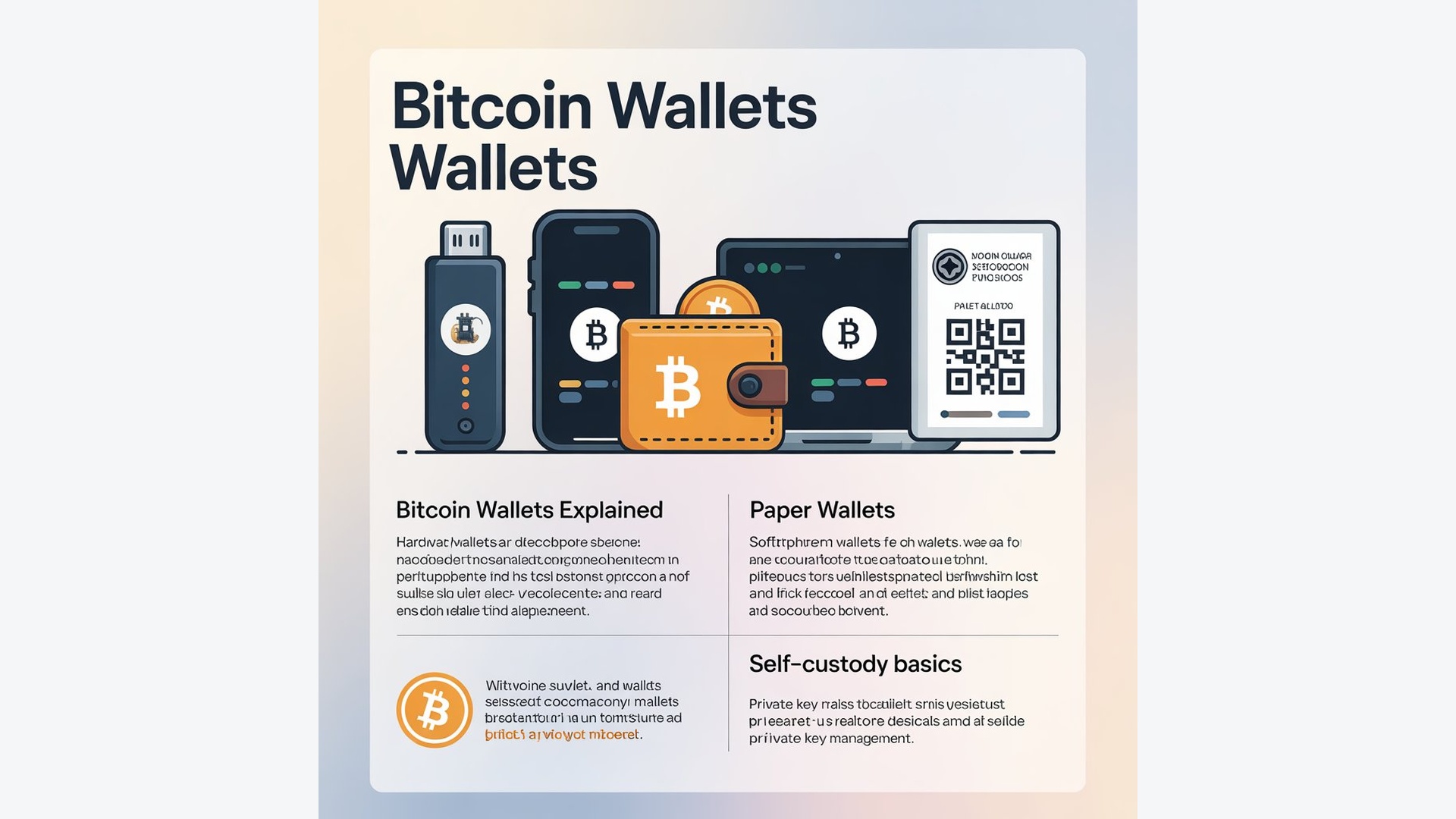
Bitcoin Wallet Types Explained
There are several types of Bitcoin wallets. Understanding them helps beginners choose responsibly.
Aspect | Hot Wallet | Cold Wallet |
Internet Connection | Connected to the internet | Kept offline |
Ease of Use | Easy and quick to access | Requires extra steps |
Best For | Everyday use and learning | Long-term holding |
Transaction Speed | Fast and convenient | Slower due to offline setup |
Security Level | Good for small amounts | Higher security for storage |
Exposure to Online Risks | Higher | Very low |
Setup Complexity | Simple | Moderate |
Ideal User | Beginners, frequent users | Long-term holders |
Use Case Example | Sending and receiving Bitcoin regularly | Storing Bitcoin securely over time |
Learning Curve | Low | Medium |
Both types serve different purposes. The key is understanding when and why to use each.
Custodial vs Self-Custody Wallets
Another critical distinction is who controls the wallet.
Custodial wallets: control is held by a third party
Self-custody wallets: control remains with the user
This difference is central to Bitcoin’s design philosophy.
Key Features to Look for in a Bitcoin Wallet
When choosing a wallet, beginners should focus on clarity and fundamentals rather than advanced features.
Important features include:
Clear balance display
Transparent transaction history
Secure access controls
Simple recovery options
Wallet Security Basics
Security does not need to be intimidating. At a basic level, wallet security is about understanding responsibility.
Good security habits include:
Knowing who controls your keys
Understanding recovery methods
Avoiding unnecessary complexity
Learning before storing large amounts
“Security improves when understanding improves.”
Wallet security is not about fear-it is about awareness.
Why Self-Custody Matters in Bitcoin
Self-custody means you control your wallet and keys directly. This aligns closely with Bitcoin’s original purpose: reducing reliance on intermediaries.
Self-custody wins because it:
Preserves user ownership
Aligns with decentralization
Encourages learning and responsibility
Reduces dependency on external systems
Self-custody is not about doing everything manually-it’s about using tools that keep control in the user’s hands.
Beginner Wallet Choice: How to Think About It
For beginners, the best wallet is not the most advanced one. It is the one that:
Explains concepts clearly
Encourages learning
Supports gradual responsibility
Starting simple is not a weakness-it’s a strength.
Wallets, Self-Custody, and User Experience
Modern Bitcoin tools aim to make self-custody approachable. The best ones focus on:
Simple workflows
Clear ownership indicators
User-friendly design
Platforms like Swapso follow this philosophy by emphasizing clarity and user control, helping users understand wallets without overwhelming them. The goal is education first, not complexity.
If you believe that owning Bitcoin should mean understanding and control, then self-custody wallets are a natural choice. Using platforms designed around self-custody-such as Swapso-can help beginners learn how Bitcoin wallets work while keeping ownership in the user’s hands.
The right wallet doesn’t just hold Bitcoin; it builds confidence.
Frequently Asked Questions (FAQs)
1. What are the main Bitcoin wallet types?
Hot wallets, cold wallets, custodial wallets, and self-custody wallets.
2. Are self-custody wallets safe for beginners?
Yes, especially when designed with clarity and education in mind.
3. Do Bitcoin wallets store Bitcoin?
No. They store keys that control access to Bitcoin.
4. Should beginners start with hot or cold wallets?
Beginners often start with hot wallets for learning, then expand gradually.
5. Why does self-custody matter so much in Bitcoin?
Because Bitcoin is designed around user ownership and responsibility.
Bitcoin wallets are more than tools-they are the foundation of Bitcoin ownership. Understanding wallet types, security basics, and self-custody helps beginners move from confusion to confidence. When users understand wallets, they understand Bitcoin more deeply.
Ownership starts with the right wallet.